South Africa: Sustainable Energy and our Mega-Cities
This short documentary is available in 2 languages, German and English.
South Africa: Sustainable Energy and our Mega-Cities
Synopsis
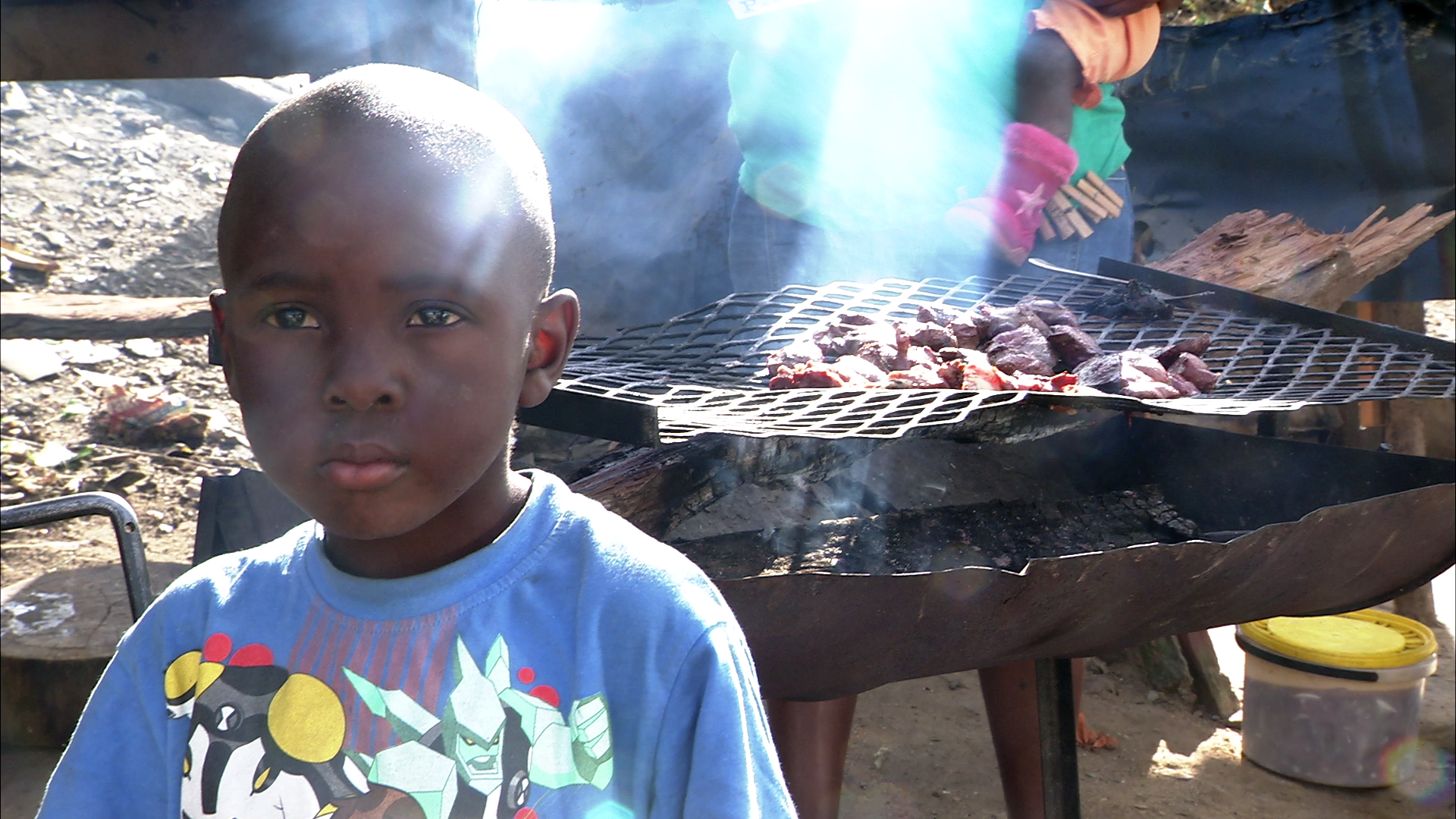
This is a short documentary film on environmental protection and alternative technology in South Africa. It is available in two languages (German and English) and illustrates in particular technologies for the poor part of our society. These technologies provide solutions to very fundamental questions, such as
- Health: no carbon monoxide within the house;
- Security: how to prevent fire;
- Social justice: access to electricity for everybody
Introduction
Our mega cities face big challenges due to their high population density, because all people need to be supplied with energy, staple food and drinking water. About 20% of South Afrika’s population, which are about 10 Million people, live in the province Gauteng (spoken „Ateng“), containing the cities of Johannesburg, Pretoria and Ekurhuleni (spoken “Ekuleni”). Within this region about 10% of Africa’s whole gross national product is obtained.
Due to its economic attraction more and more people come. But for many, not enough living space is available. Informal settlements develop.
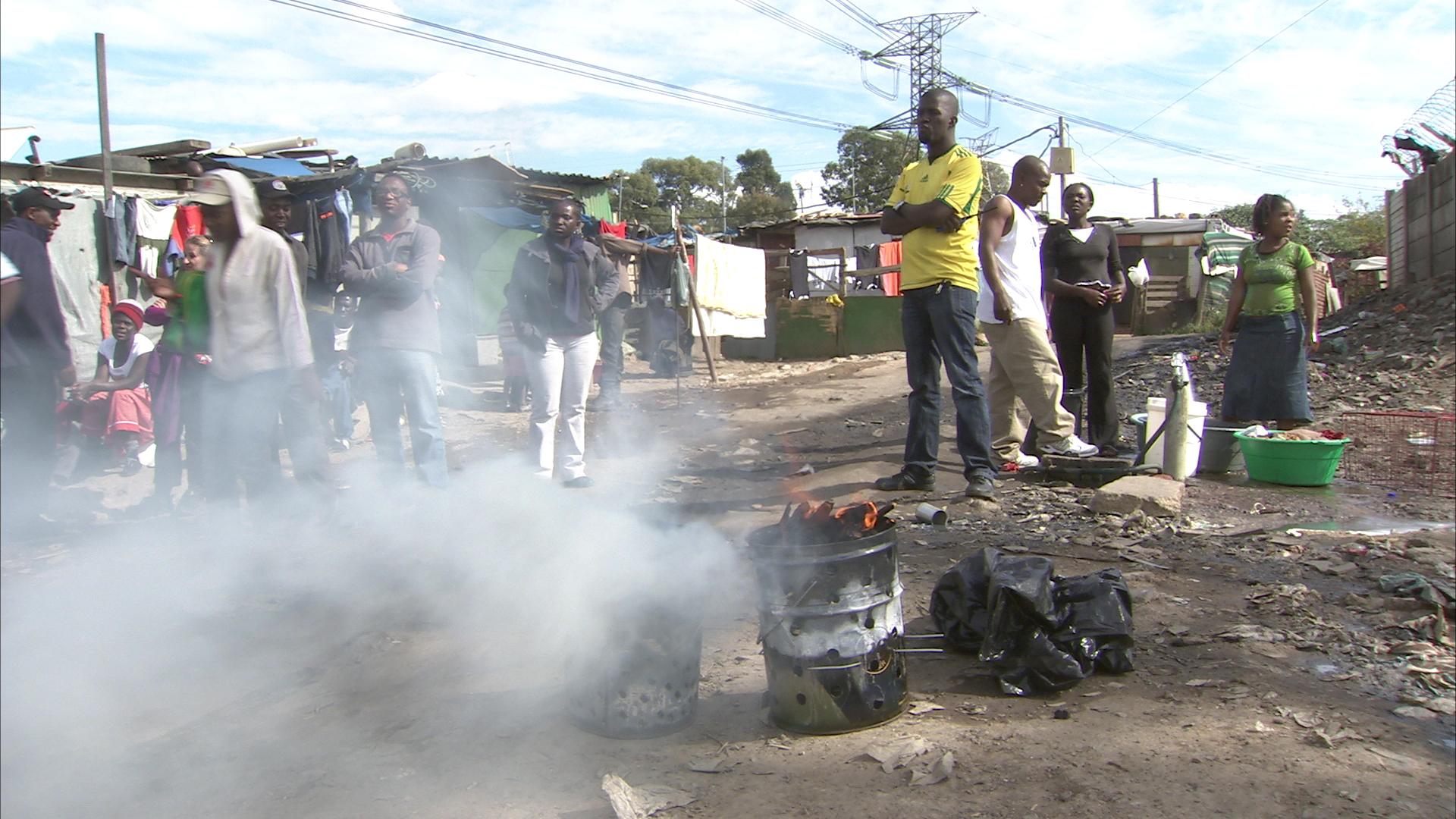
Setswetla, located in the Township Alexandra, is one of such informal settlements, and located on the slope of the Juskei River. The government installs water places but the hygienic conditions are very problematic.
The Right of Living Space is implemented within today’s post-apartheid constitution and the government supports with massive public housing programs the people in need. Here, within River Park, simple houses are given away to the people of Setswetla.
At the University of Johannesburg works Professor Annegarn in collaboration with the University Stuttgart in order to find solutions related to energy conservation and general improvements of the living conditions in these Townships. The project, which is partly funded by the German Federal Ministry of Education and Research, developed a variety of astonishing applications.
In model houses, which are also inhabited by students, Professor Anegarn investigates the Energy Efficiency, which can be improved by many simple measures. Houses build by the government often show in the wrong direction. The front side with the main windows, faces frequently the shady side, where as the backside, with the bathroom window, is directed to the sun. By orienting the houses to the sunny side, the inner temperature increases during the morning and evening hours. Extending the overhanging lower edge of the roof creates a shadow in order to avoid overheating during lunchtime. Black colouring of the floor provides heating during evening hours and together, with an isolation layer below the ceiling, the house isn’t required to be heated during night hours.
Bricks can also be created directly at the building side and fitted together without cement.
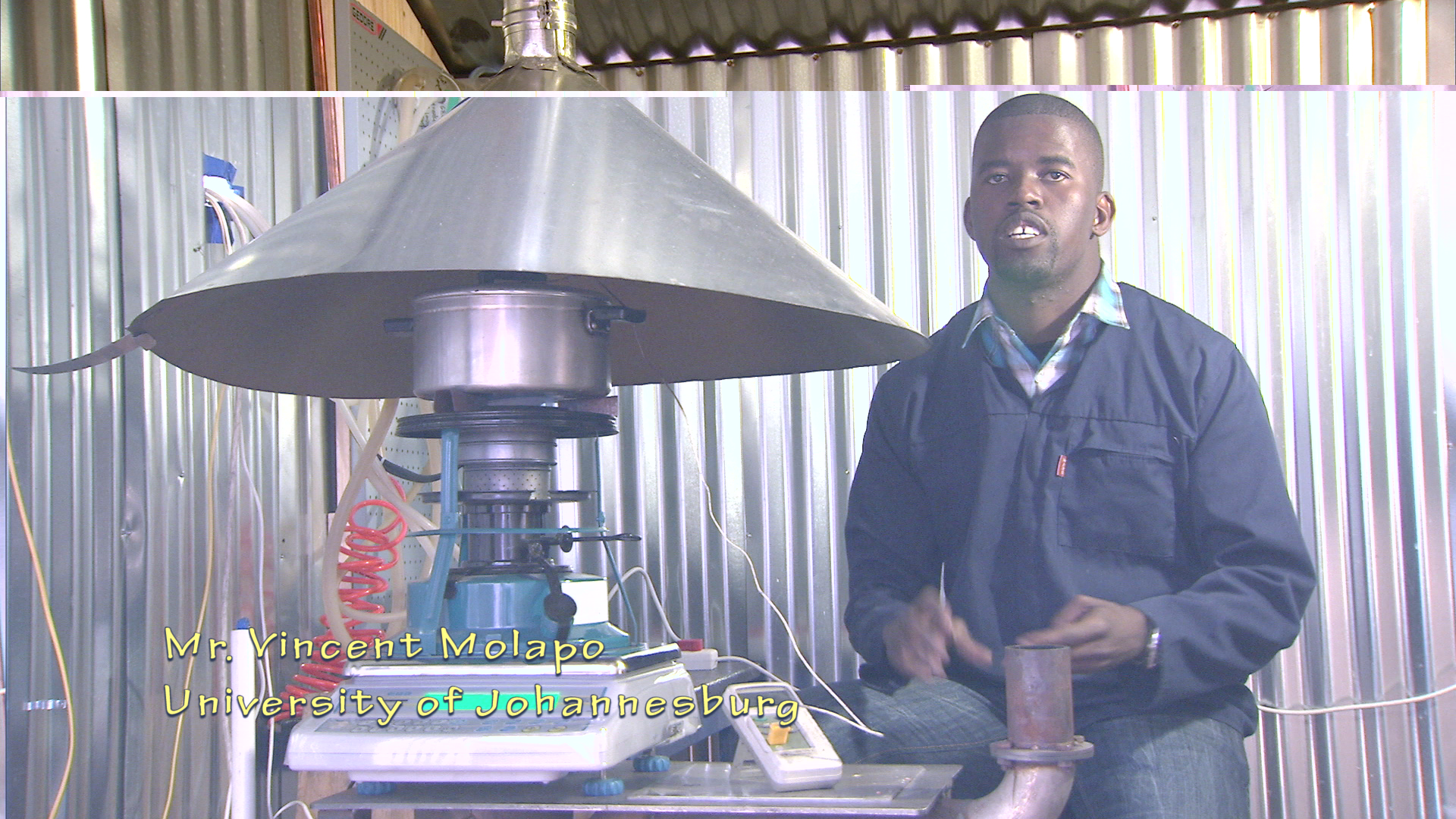
Professor Annegarn’s team also research on improvements related stoves and burners. Here, it is import that the pod, the flame and the fuel are treated as an integrated system. Every month about 80 houses catch fire in Setswetla. The fire spreads easily between the shanties due to their tight and simple design. The fire is often caused by cheaply and illegally imported burner, which can even explode when they knock over.
(If you want to know more then watch the film!)
Credits
English Version, EnerKey Projekt http://www.enerkey.co.za , Camera, Postproduction and Voice-Over by Guido Nageldinger PhD, Nageldinger Film http://www.nageldinger-film.de (c) 2010.
Energy is one of the key issues to be addressed in order to implement sustainability. The EnerKey project, comprising German and South African participants, developed a variety of applications related to sustainable energy.
Within the project consortium participate: University of Johannesburg, IER University of Stuttgart, TÜV Rheinland Group (TIE), Inst. for Future Studies and Technology Assessment (IZT), FhG Building Physics, INEP GmbH, City of Stuttgart, German Chamber of Commerce, German Agency for Technical Cooperation (GTZ), Provinicial Government Gauteng, City of Johannesburg, Ekurhuleni Metropolitan Municipality, City of Tshwane, Eskom, Sustainable Energy Africa (SEA), University of Cape Town, Energy Research Centre (ERC), The Council for Scientific and Industrial Research (CSIR), PEER Africa (Pty) Ltd, Sustainable Energy Society of Southern Africa (SESSA) and South African Energy Association (SANEA).
The project is sponsored by the Federal Ministry of Education and Research, Germany (BMBF) and South Africa’s National Energy Research Institute (SANERI).
I would like to thank the participants of the film: Mr. Vincent Molapo, Ms. Nwamaka Nnodu, Ms. Beverley Terry, Mr. David Kimemia, Prof. Harold Annegarn from the University of Johannesburg, Mr. Joe Baleka CEO, TEPRASM & Mr. Timon Wehnert, Institute for Futures Studies and Technology Assessment, Berlin, for his scientific advice.